


I’ve been rereading the A Court of Thorns and Roses series in preparation for ACOTAR Book 6 (if it ever comes out). I’ve always been very into the lore behind Sarah J. Maas’s worlds, and in this reread, I’m paying very close attention to how the boundaries of the Maasverse cross together.
If you’ve read the entire Maasverse universe, you know that Aelin fell through both Prythian and Midgard when she forged the key, and Bryce herself travelled to Prythian. Since the connections are there in front of us, I wanted to break down the magical objects and items we are presented with throughout the lore, and explain how they are connected to one another.
A Court of Thorns and Roses by Sarah J. Maas
Follow Feyre the Huntress’s adventures today! 🏹🐺

Join Celaena’s epic journey now! 🔥🦌
Drop into Lunathion now! 🗡️📯
This post contains massive spoilers for A Court of Thorns and Roses, Throne of Glass, and Crescent City.
Kill Switches
The Asteri is a parasitic race that travels from world to world, draining life from its inhabitants to survive. I’m a long-term believer that the Asteri and the Valg are one and the same (one feeds off energy, the other off fear) but more on that in a different post.
In House of Flame and Shadow, we learn that the Asteri use ley lines to travel between worlds, leeching off each new universe and setting up base. But here’s the kicker: as they settle in, they implement kill switches, failsafe devices designed to destroy the world if the Asteri are ever eliminated or need to evacuate.
There are currently two known kill switches in the Maasverse.
The Cauldron

World: Prythian (A Court of Thorns and Roses)
Wielder: The Mother, King of Hybern, the Asteri
Status: Reforged
The inhabitants of Prythian believe that the Mother, the god of Prythian, poured from a Cauldron to create all life on their planet. Silene, former High Lady of the Night Court, also tells us the Cauldron was poured at the top of Ramiel, at the foot of the onyx monolith Illyrian warriors revere, and that life started there.
The Cauldron has three feet that it needs to sit on to function. And although it’s described as benevolent originally, the Bone Carver mentions that it fell into the wrong hands and terrible things were done with it. We can consider that this is the Asteri, or the Daglan as known on Prythian, who were on the planet 15,000 years ago and may have turned it into a kill switch. However, we’re not sure if the Cauldron or the Mother had good intentions to begin with, or if the Mother is a fabrication of the Asteri’s narrative from back in the day.
Fae from other worlds created the Book of Breathings (two stone tablets) to wield the Cauldron.
The Cauldron was used by the Daglan or Asteri to create many creatures on Prythian, some of whom are still locked in the Prison. In Crescent City, it is implied that the Illyrians are a creation of Hel-like creatures, so the Asteri might have created the Illyrians using the Cauldron.
Gwydion (the Starsword) and Truth-Teller are Cauldron-made weapons created to defeat the Asteri.
When the Cauldron is destroyed as Amren uses it to return to her original form—an angel of death? (Is she the same kind of creature as Hunt?)—at the end of A Court of Wings and Ruin, Prythian’s kill switch is activated. Feyre, who is Made, can channel power back into the Cauldron, and she channels Rhysand’s power to fix it.
Given the nefarious nature of the Cauldron, I have a lot of questions. I think the Mother had good intentions. I believe the Mother is a face of the Three-Faced Goddess from Throne of Glass. However, after the Asteri warped the Cauldron’s purpose, how can we trust anything it does? For example, the Cauldron has made Nesta and Cassian, and Lucien and Elain, mates. How can we trust that these mating bonds are authentic when the Cauldron is nothing but malignant?
I’m going to make another post about the sham of a mating bond between these parties soon. But more importantly, how do we know Rhys came back as himself when he gave his power back to the Cauldron and was revived afterward?
The Core

World: Midgard (Crescent City)
Wielder: the Asteri, Bryce Quinlan
Status: Destroyed
The Asteri collect First Light from their citizens, which is another way of saying they tax the inhabitants’ magic to feed themselves and power the city. That power is collected in something called the Core, a large energy source located beneath the Asteri’s palace.
Bryce realizes the Asteri have made the Core into Midgard’s kill switch, throwing a wrench into her plans to destroy it and eliminate the Asteri, since doing so would also mean destroying her world.
At the end of House of Flame and Shadow, Bryce fires a bullet into the Core using the Godslayer Rifle, triggering Midgard’s kill switch. However, the catastrophic failure is averted when they launch the Core and the Asteri into a black hole.
Dread Trove
The Dread Trove is a collection of magical objects made by the Cauldron. The rulers created the Dread Trove to secure their power and oppress their people. The Trove was created hundreds of years ago, with the full collection eventually scattered across space.
Each item in the Trove has a different purpose. The Asteri created the Trove as weapons, so it would make sense that as they worldwalked, these objects were left behind in different realms.
Currently, we know about four objects that belong to the Dread Trove, the Mask, the Harp, the Crown and the Horn.
Queen Theia hid the trove away from the Asteri. She used the Horn and the Harp to open a gate to Midgard for her people to live. Eventually Silene brought the Harp back when she returned to Prythian. The Horn stayed in Midgard.
The Mask (Death Mask)
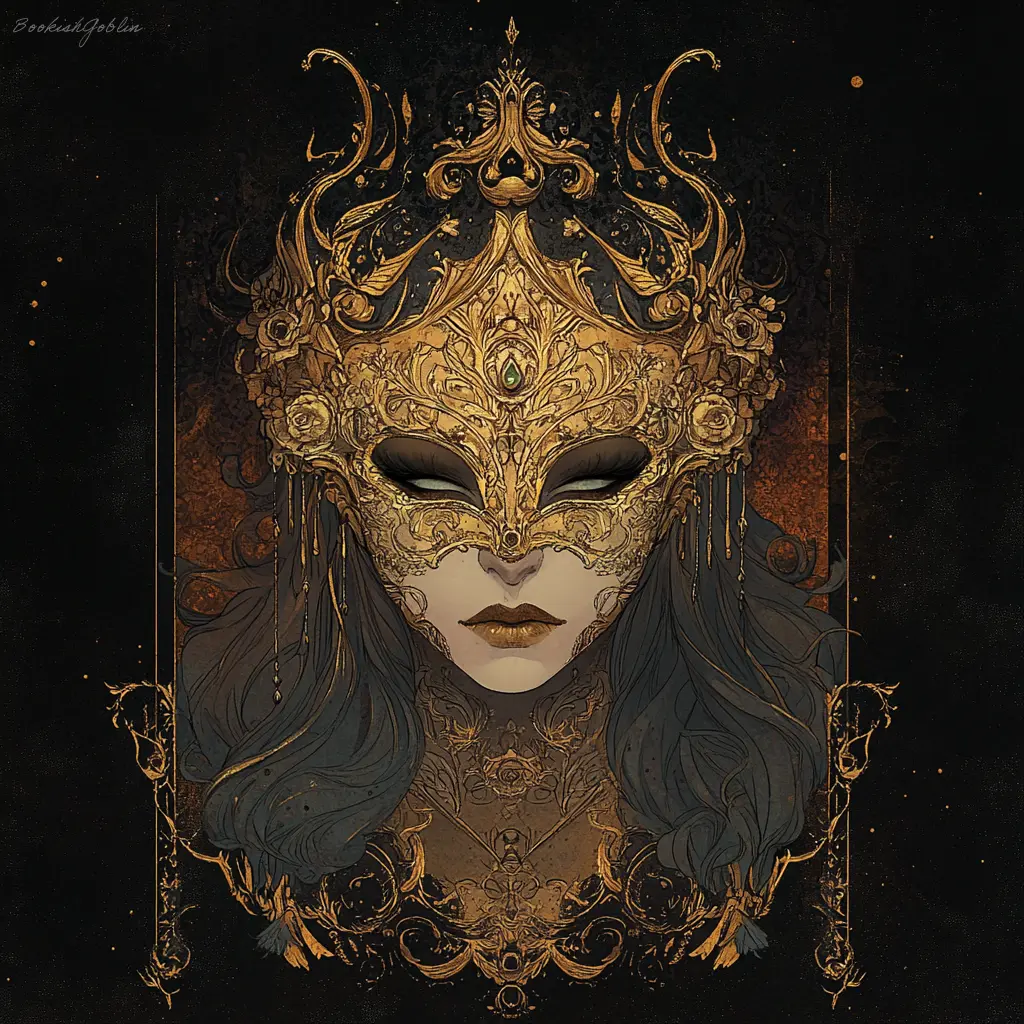
World: Prythian (A Court of Thorns and Roses), Midgard (Crescent City)
Wielder: Nesta Archeron, Bryce Quinlan, Hunt Athalar
Status: Locked away in Hewn City
The Mask, also known as the Death Mask, is an intricate golden artifact that covers the entire face. Its shape is that of a long-forgotten king. It is said that the wearer can never remove the Mask, and the only way to take it off is by beheading the one wearing it.
When worn, it has the ability to summon and command the dead.
Nesta Archeron can summon and wield the Mask, and she is able to remove it—although it’s difficult for her to do so. Nesta lends the Mask to Bryce to wield in the final battle. Bryce handles the Mask much more easily than Nesta, perhaps because she is Starborn, which is equivalent to being of the Dusk Court. Hunt Athalar also wields the Mask, due to his connection to Bryce as her mate. In my opinion, though, it’s not the mating bond—Bryce and Hunt are carranam, their magic answering one another’s, which makes Hunt also able to use the Mask.
After the final battle, Bryce returns the Mask to Prythian, along with Truth-Teller.
The Harp

World: Prythian (A Court of Thorns and Roses)
Wielder: Nesta Archeron, Queen Theia, Silene
Status: Locked away in Hewn City
The Harp is a small, golden instrument with twenty-six strings. It is capable of opening any doors, physical or otherwise. “Otherwise” is important here, because the Harp can open portals between worlds (Wyrdgates) and can also cross the space-time continuum. (Because what is time if not a form of space, right? And the Harp is absolutely a magical version of string theory.)
It can also alter reality. The Harp was used to create the Prison, turning Fae stone into the magical contraption we know now.
Nesta uses the Harp to stop time, giving herself the chance to bargain with the Cauldron and the Mother to save Feyre’s life.
The Crown

World: Prythian (A Court of Thorns and Roses)
Wielder: Nesta Archeron, Briallyn
Status: Locked away in Hewn City
The Crown is made of gold and features sharp golden spikes. It has the ability to influence and control others, even through mental shields. However, it requires close proximity to the target in order to be effective.
Queen Briallyn possesses the Crown and uses it to manipulate the war against Prythian. After Nesta defeats Briallyn, she takes possession of the Crown as well.
The Horn (Luna’s Horn)

World: Lunathion (Crescent City)
Wielder: Bryce Quinlan
Status: Crushed into dust and tattooed on Bryce Quinlan’s back
Although depicted in Lunathion folklore for years as a weapon wielded by the first Starborn Prince, Luna’s Horn is actually made by the Asteri and is part of the Dread Trove. The Horn can open gates between worlds.
The Horn and the Harp were used in combination to open a portal from Prythian to Midgard, transporting the Dusk Court people away from the Asteri. The Horn was broken in the process and became unable to open portals.
Danika stole the Horn, had it crushed into powder, and had it tattooed on Bryce’s back. Since the Trove can only be wielded by Starborn Fae (more on what that means for Nesta later), Bryce is the only one who can use the Horn.
Bryce Quinlan, bearer of the Horn, is injected with Synth, which repairs the Horn tattooed on her back, restoring it to full capacity.
The language the Horn is tattooed in is the same language used in the Book of Breathings. I also think this language is Wyrdmarks.
Worldwalking
Worldwalking is first introduced in Throne of Glass as the primary method the Valg use to invade new realms. Worldwalking is explained as using gates between realms to move from one world to another. Members of the Throne of Glass world use Wyrdgates to travel between realms, which are opened using Wyrdkeys.
If that sounds suspiciously similar to the events in Crescent City, it totally is. What Bryce does is also worldwalking. That also means the Asteri are worldwalking when moving between worlds, which only further supports my theory that the Asteri and the Valg are one and the same.
We currently know a few worldwalkers:
- The Valg kings and brothers: Orcus, Mantyx, and Erawan
- Maeve
- Aelin
- Bryce Quinlan
Sarah J. Maas is the mastermind of connecting her worlds with one another, dropping breadcrumbs for us to follow that lead to big reveals seven books down the line. I, for one, am ecstatic to see where we go next, even if I was disappointed that Aelin and co didn’t walk into Midgard for the final battle in House of Flame and Shadow. However, with worldwalking confirmed and Brennan’s line continuing via Lidia, I’m holding onto hope and constantly searching for more evidence to see how these worlds are connected.
Do you think the three worlds are connected? Do you think Asteri is also Valg? Have I missed any other links or theories? Let me know in the comments, and sign up for our newsletter for more deep dives into all things ACOTAR, Throne of Glass, and Crescent City.
Wyrdgates

A Wyrdgate is a portal between realms. They are described as black areas that cut through reality, more or less like black holes tearing through time and space. (Personally, I imagine them to look like the portals in Interstellar, if you’ve seen that movie.) Wyrdgates can open randomly in places, or they can be deliberately opened through the use of Wyrdkeys.
I strongly believe the “thin places” described in House of Flame and Shadow are where Wyrdgates can be opened more easily than elsewhere. The Rifts in Midgard are Wyrdgates where worldwalkers can pass through different worlds.
We already have several confirmed instances of Wyrdgates being used:
- The Valg who arrived on Erilea came through a Wyrdgate.
- Aelin passed through a Wyrdgate while fighting the Valg prince in Crown of Midnight.
- Aelin opened a Wyrdgate to speak to Nehemia.
- Maeve used a Wyrdgate to flee from her husband.
- Bryce used a Wyrdgate to travel to Prythian, although she believed she was aiming for Hel.
Now, I want to dig deeper into the “thin places” terminology introduced in Crescent City. A thin place is an area covered in mists where it is easier to open a Wyrdgate.
“Every world has at least one thin place,” Vesperus drawled. “And there are always certain people more suited to exploit it—to claim its powers, to travel through them to other worlds.”
(House of Flame and Shadow, p. 259)
Connecting this to what we know about the Asteri using ley lines to cross worlds: the ley lines run through thin places, which allows Wyrdgates to open between realms.
Now, that’s not exactly earth-shattering information on its own. However, we have to talk about the mountains in Sarah J. Maas’s worlds. Mountains are consistently associated with portals, Wyrdgates, and strange magical phenomena.
My theory? Every mountain described in the Maasverse is a thin place where Wyrdgates can open easily.
Let’s take inventory:
- Morath: This one’s easy. It’s literally the Valg capital of Erilea. It makes perfect sense that this would be a thin place where Valg forces invade regularly.
- Avallen: The Fae island of Crescent City, covered in mist. Already confirmed as a thin place.
- Northern and Southern Rift: Both are mountainous areas with active ley lines and known rifts—definitely Wyrdgate territory.
Now for the interesting stuff: Prythian is full of mountains. And you know what? The first-ever crossover event happened at a mountain.
- The Prison: The Prison is a mountain, and it is mist-covered, fitting perfectly into the definition of a thin place.
But what about other mountains?
- Under the Mountain: The sacred mountain of Prythian located in the eerie region called the Middle. Feyre describes this place as foggy and steeped in ancient magic. I am convinced Under the Mountain is a thin place, ideal for worldwalking.
- Hewn City: Hewn City is carved under a massive mountain. While there’s no direct mention of mist or portals here, it’s suspicious. Why build your city under a random mountain unless something important was there? I lean toward it being just a dark aesthetic choice, but who knows.
Now onto more crackpot theories:
- The House of Wind and the Library underneath: Yes, there’s no specific mist described here, but how did Bryaxis—a literal eldritch creature—end up at the bottom of the library if not via a Wyrdgate? I fully believe the Library is sitting on a thin place.
- And lastly: Ramiel.
Ramiel is the sacred mountain of the Illyrians. The Illyrians are hinted to be the Princes of Hel’s attempt to create a species to fight the Asteri. What if the first Illyrians who arrived on Prythian crossed through a Wyrdgate atop Ramiel? The stone obelisk at its peak could have been the anchor for a Wyrdgate.
Continuing with that line of thinking:
We know the Mother supposedly poured from the Cauldron to create life atop Ramiel. You know what happened to the gods in Erilea when Aelin forged the Lock? She banished them to another world via a Wyrdgate.
It’s heavily implied that this new world could be Hel. We already know there’s a passageway from Hel to Prythian thanks to the Illyrians.
What if the Mother was one of these gods, traveled through a Wyrdgate, and eventually arrived at Prythian, creating the High Fae as we know them?
The only thing that complicates this theory is that Bryce drops onto the lawn of the River House, not at a known thin place. Personally, I wish Bryce had landed directly at the Prison, but I think that was simply a plot choice to have her conveniently show up in Azriel’s lap in House of Flame and Shadow.
Wyrdkeys

Wyrdkeys were made by the Valg kings to control the gates between worlds. There are three known Wyrdkeys total, one per king. Brannon defeated the Valg kings and took possession of the keys. Maeve later stole them.
Mala helped Brannon steal the keys back, and the two of them traveled to another continent—Erilea—to keep the keys away from Maeve. Brannon hid the keys and left cryptic hints for his daughter, Elena, to solve the riddle and restore the keys, forging the Lock again to prevent the Valg from ever returning.
Of course, we all know how that went. Elena, having been the sacrificial lamb promised to forge the Lock, decided her love for Gavin triumphed over duty, and she only locked Erawan away because she did not want to die. I could write an entire post about how Elena Galathynius Havilliard is the true villain of the series, but more on that later.
Either way, after Elena spectacularly failed, it fell onto Aelin to forge the Lock properly. But she needed the Wyrdkeys to do it. Aelin spent six books searching for the keys.
Here is what happened to each:
- The first Wyrdkey was hidden in the crown of Elena’s sarcophagus. Dorian Havilliard I found it, fell under the influence of the key, and unlocked Erawan’s tomb beneath Morath.
- The second Wyrdkey was implanted in Kaltain Rompier’s arm. The theory was that a magically gifted bloodline could wield the power of the Wyrdkeys, which proved correct. Kaltain originally possessed fire magic, but the implantation of the key corrupted her power, turning it into Shadowfire. After Kaltain destroyed Morath, she carved the key out of her body and gave it to Elide Lochan, who brought the key to Aelin.
- The third Wyrdkey was always inside the Amulet of Orynth. Brannon had forged the amulet with the key hidden inside, thinking the safest place was to have it worn by the current ruler of Terrasen. Aelin’s mother gifted the amulet to her the night before their deaths. Aelin believed she lost it when she fell into the river, but it turned out Arobynn Hamel had taken it. He never knew what it was, and Aelin eventually tricked him into giving it back to her.
Are the Valg and the Asteri the Same?
Now that we have covered the Wyrdkeys, I want to return to one of my original theories: the Valg and the Asteri are the same species.
I will write a full post about this soon, but here are some parallels that are worth calling out if you have made it this far:
- The Valg are creatures who feed on fear, travel worlds via Wyrdkeys they created, and act as parasites invading their hosts and devouring them from within.
- The Asteri are creatures who feed on magical power, travel worlds using ley lines, and created the Dread Trove, including Luna’s Horn, to open gates between worlds. They also act as parasites, draining their hosts from within.
I am 100% confident that the Valg are actually the Asteri. They are different factions of the same race, choosing to feed on different life sources to sustain themselves.
Wyrdmarks

Wyrdmarks are an ancient runic language used alongside blood magic to cast spells.
We are not sure about the origins of Wyrdmarks, but they are present across all three of Sarah J. Maas’s worlds.
In Throne of Glass, Celaena begins reading about Wyrdmarks in the library. She later discovers that Cain uses Wyrdmarks to open portals, summoning creatures from other worlds to sacrifice other competitors and become stronger.
Nehemia can use Wyrdmark magic as well, which she uses to save Celaena and protect her during the final battle of the tournament.
Later, Celaena uses Wyrdmark magic to both seal a creature summoned by the King of Erilea and to open a portal to speak with Nehemia after her death.
It is believed that the collars the Valg princes place on mortals to control and possess them are inscribed with Wyrdmarks.
Aelin herself has a Wyrdmark on her brow that says “nameless,” prophesying her role in forging the Lock. (Where is Dorian’s nameless mark though? He could just as easily fulfill the prophecy according to the wording.)
Rowan tattoos Wyrdmarks on Aelin’s back, worried his mate would sacrifice herself for the Lock and would need a magical guide to find her way back to him.
While the usage of Wyrdmarks is mainstream throughout Throne of Glass, we actually see Wyrdmarks pop up in two other Sarah J. Maas universes.
- The Book of Breathings is an ancient text written in a runic language, carved into stone rather than on paper. There is a strong theory that the Book of Breathings is written in Wyrdmarks. Its connection to worldwalking magic is strengthened when Bryce Quinlan encounters the Book of Breathings in an antique library in Lunathion.
- Bryce’s tattoo inked with Luna’s Horn is also etched in a runic language. And how are tattoos made? They are inked into skin using blood. Bryce’s tattoo is a set of Wyrdmarks, just like Aelin’s.
It is easy to believe there are a lot of retconned magic systems in the Maasverse. And… there are. Some of the overlaps feel like subconscious bias, in my opinion, but the majority of the connections we see in the Maasverse are intentional.
For example, the entire Throne of Glass story is planted within the first 100 pages for us to notice. I’m a firm believer that SJM plans these things deliberately, so we can connect them later on. I have a ton of Maasverse theories connecting Throne of Glass, A Court of Thorns and Roses, and Crescent City together (like, I’m pretty sure Rhysand’s mother and sister went through a portal in the Silver Lake in the Spring Court and arrived in Lunathion…).
But I want to hear your favorite theories. Do you think the three worlds are connected? Let me know in the comments!


Leave a Comment