


“Death is only meaningless if it does not change us, Vis.”
― James Islington, The Will of the Many
Last year, I reintroduced myself to the high fantasy genre after taking a ten-year break. My first read of the genre, the Mistborn trilogy, left me starving for another well-thought-out plot and intriguing magic system. (And yes, I’m aware of how massive the Cosmere universe is—but I wanted to branch out!)
During my search for my next fantasy read that could hold my very short attention span, I stumbled across The Will of the Many.
To be frank, it was the cover that caught my attention at first. I mean, look at it—it’s beautiful, elegant, and screams high quality.
But I stayed for the plot.
I take pride in recognizing the patterns authors weave. It’s my favorite thing to theorize about the plot and work through the breadcrumbs the author drops as they tell the story. I also get bored when the plot is too predictable and I solve its puzzle too quickly. I’m happy to tell you this book left me flabbergasted on multiple occasions. After finishing, I had to rush to the internet to find people to talk to about the ending.
Even though I finished The Will of the Many by James Islington three weeks ago, I haven’t been able to think about much else since.
What is The Will of the Many about?
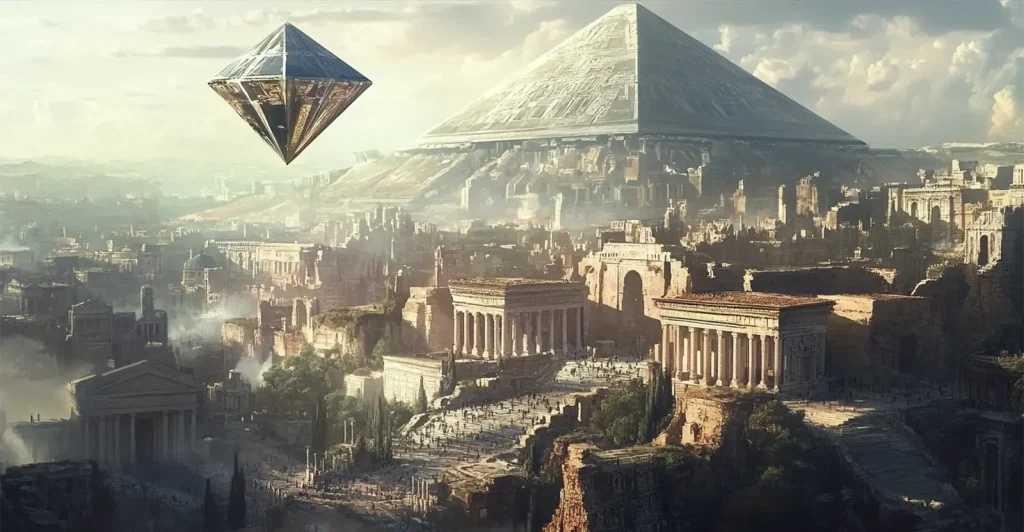
The Will of the Many is the first book in the Hierarchy series by James Islington, best known for his well-reviewed Licanius trilogy. The story is set in the Catenan Republic, a society reminiscent of the Roman Empire. The Republic is organized in a pyramid-like hierarchy where lower members cede their physical and emotional strength—known as Will—to those above them. The elite, empowered by this Will, use it for physical strength, advancement, and even magical abilities.
At the heart of the story is Vis, an orphan working in a prison, hiding a dangerous secret in a society that shows no mercy to those who defy its rules. Unexpectedly, Vis is adopted by a member of the Republic’s elite and sent to the prestigious Catenan Academy, where the best and brightest are groomed to lead.
While investigating a mysterious death, Vis finds himself navigating the academy’s deadly power struggles and uncovering hidden conspiracies. But with a past he’s desperate to escape and his own dangerous goals to pursue, Vis must tread carefully—because failure could cost him everything.
Review
Overall Impressions
I would give this book six stars if I could.
Going in, I knew this book had been well-received by most fantasy readers, but I truly wasn’t prepared for how tightly it would grip me until the very last page.
So many books these days claim to be “the next Hunger Games” or “Harry Potter for grown-ups.” While these comparisons are often accurate, they usually result in derivative works that rely too heavily on recycled tropes, leaving the story feeling superficial and predictable.
The Will of the Many, however, earns its “Harry Potter for grown-ups but with a dash of Gladiator and/or Hunger Games” label in the best way possible. It delivers those vibes in a refreshing and original setting, perfect for readers who love this particular genre but are ready for an inspired and new take on the dark academia trope, complete with a magic system that is complex, well-thought-out, and utterly immersive.
When you read as much as I do, it’s hard to be genuinely surprised. I’m sure many avid readers feel the same way. That’s why it was such a joy to find myself completely caught off guard by this book. I didn’t know where the plot was headed, and for the first time in a while, I felt positively anxious—on the edge of my seat, unsure of what would happen next.
Character Development
I’ll admit, I’m a bit burnt out on the “brilliant, chosen one” trope, but Islington does a great job with Vis. Yes, he’s all those things—but he’s also flawed in a way that feels refreshingly real. His overconfidence and breathtaking anger management issues make him feel grounded, even as he stands out.
At the start of the book, he’s trapped in the bubble of his upbringing at Suus then at the orphanage. It gives him a false sense of superiority due to his isolation. But then you get to see him actually fail at things. It’s satisfying to watch him get humbled by his circumstances—not through a convenient burst of power or a companion swooping in to save him, but by being forced to learn and grow just to survive.
The supporting characters are equally well-drawn and never feel like mere plot devices. Each one is carefully developed with their own desires and motivations. While Vis’s loyalty and compassion are demonstrated time and again through his relationships with Callidus and Eidhin, those characters don’t exist solely to highlight his traits.
Callidus and Eidhin have their own goals and arcs. It makes them compelling additions to the storyline rather than soundboards for Vis.
As for the rest of the cast, their motivations are wonderfully ambiguous, which adds to the tension and intrigue. I never dreaded scene changes to different characters because each shift felt purposeful and meaningful to the plot. Emissa, Lanista, Veridius, and Ulciscor, in particular, keep you guessing. Even by the end of the book, their intentions remain unclear to some degree, which makes every interaction with a side character a welcome—and suspenseful—change in the narrative.
I guess what I’m trying to say is that there are no filler chapters in this book.
Plot
The story is captivating from the first page, largely due to the unusual and horrifying magic system. A society built on draining the life force of lower-class citizens to empower the elites is both fascinating and deeply unsettling. The commentary on inequality and greed is not subtle—nor should it be. The blatant exploitation is devastating to witness, but that’s not even the main plotline.
Underneath this direct social critique lies a gripping murder mystery. Imagine a mix of The Hunger Games and Harry Potter in a dark academia setting, and you’ll start to get an idea of the book’s tone.
Vis, the protagonist, is sent to the Catenan Academy—a lion’s den for him, considering he’s the prince of a conquered kingdom hiding in plain sight. He’s incredibly clever at playing the cards he’s dealt, but his grief and anger constantly weigh him down. And Vis isn’t the only one whose secrets have secrets.
Every character seems to have something to hide, but as you read on, you begin to question whether the secrets they appear to have are even the real ones. The conspiracies within this story have conspiracies of their own, forming an intricate web that unravels as the plot progresses. You’ll find yourself questioning the status quo with every page, and the narrative never lets up.
The first part of the book focuses on worldbuilding and establishing Vis’s reality, but these chapters never feel like filler. Even before the inciting incident, characters like Ulciscor and Lanista are so shady that they keep the tension simmering. In fact, everyone in this story is shady—including Vis—and since the story is told from his point of view, it adds another layer of complexity.
Once the setting shifts to the Academy, the intrigue kicks into high gear. The characters you meet are all razor-sharp and relentlessly pursuing their own agendas. The political maneuvering is endlessly satisfying, and just when you think you’ve grasped the plot, another layer of this society is peeled back, leaving you lost again in the best way possible.
On top of that, you’re keeping track of the worldbuilding, Academy classes, Vis’s mission (and his secret missions), and trying to figure out what everyone else is plotting. And then there’s literally a Hunger Games portion of the story on top of it all. It’s like a Russian nesting doll of conspiracies—you can’t stop unpacking it.
I don’t think I fully understood the plot as I read it—and I mean that in a good way. It never felt predictable, and the author made me work to piece everything together. Even after finishing and heading to Reddit to see what others thought, I realized I’d only scratched the surface. I caught some of the big plot points, but there were countless implications I missed. It left me positively frustrated, itching to dive back in and hunt for all the clues I overlooked.
The ending is something I still am hungover from. Even now as I think about it, I want to scream. It was that intense. No epilogue scene has made me want to run back to the third act of the book so quickly. I audibly gasped when I finished, and could not stop rethinking I’ve read in the past hundred pages. I still do.
And if you’re familiar with my reviews, you know I tend to gravitate toward spicy books filled with romance and explicit scenes. But this book? While there is some romance in The Will of the Many, it has no spice whatsoever—and it doesn’t need it. It’s absolutely perfect just the way it is, making it one of my favorite reads of 2024, if not the very best.
What didn’t work for me?
I can’t criticize much about this book, but I have to admit—it’s a challenging read. The magic system is complex, and the names and places are heavily inspired by ancient Rome, which adds another layer of intricacy. Coming from a STEM background, I thought I’d be able to keep up with the mechanics of the magic system, and while I was thoroughly delighted by the philosophical and technical discussions surrounding the use and function of Will, there were moments where I felt almost too dumb to follow along.
And then there’s the ending. I’m hesitant to even call it a downside because it was an absolute mindfuck that left me staring at the wall for a long time after finishing it. But as brilliant as it is, there’s no denying how complex it gets. I found myself scouring Reddit posts theorizing and explaining the ending to make sure I fully understood it (spoiler: I was only about 50% right). Maybe that’s just me getting back into fantasy and science fiction after years away from the genre, and this level of complexity is par for the course. Still, between the intricate worldbuilding and the demanding ending, I can see these elements posing a challenge for more casual readers.
And that would be a shame because this book is a masterpiece. It absolutely earns its title as “fantasy’s newest darling,” as advertised.
Closing Thoughts: Before You Go
“They ask something small of you. A thing you would prefer not to do, but is not so terrible. You think you are working your way up, but in fact they are changing you. Moulding you into what they think you should be, one compromise at a time.”
― James Islington, The Will of the Many
The Will of the Many is a masterpiece of fantasy, seamlessly weaving commentary on inequality between elites and the lower classes into a dark academia murder mystery.
It’s challenging, demanding, and mind-numbingly well-thought-out—occasionally leaving you questioning everything, including your own intelligence.
The second book in the series, The Strength of the Few, is slated for release in 2025, and I already know I’ll be clearing my schedule—work, life, and responsibilities—to devour it. I fully expect to be left both emotionally satisfied and perpetually perplexed all over again.
If you’re looking for a book that will challenge you, live in your head rent free weeks after you finish, and leave you craving more, The Will of the Many is the perfect fantasy read. With its dark academia setting and a complex, brilliantly executed magic system, it’s a story you won’t want to miss.


Leave a Comment